- Home
- about us
- Products
- Download
- Videos
- Insulation Technology
- Q&A
- Contact Us

 Hotline
 |


| Quantity: | |
|---|---|
Anti-Static Acrylic Sheet (ESD PMMA Sheet)
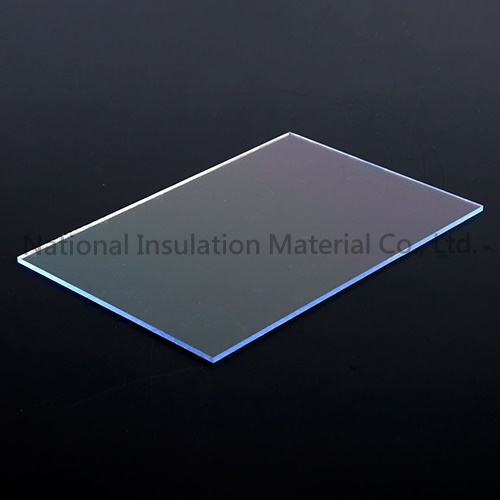
Anti-Static Acrylic Sheet, also known as Antistatic PMMA Sheet or ESD Acrylic Sheet, is a high-performance engineering plastic developed from polymethyl methacrylate (PMMA) with a professional anti-static surface coating applied on one or both sides. This material combines excellent optical transparency, electrostatic discharge (ESD) control, low dust attraction, and easy machinability, making it an ideal solution for semiconductor manufacturing, TFT-LCD production, cleanroom engineering, and precision electronic equipment.
By effectively controlling static electricity accumulation, anti-static acrylic sheets help protect sensitive electronic components, reduce contamination, and enhance equipment reliability in high-tech manufacturing environments.
What Is Anti-Static Acrylic Sheet?
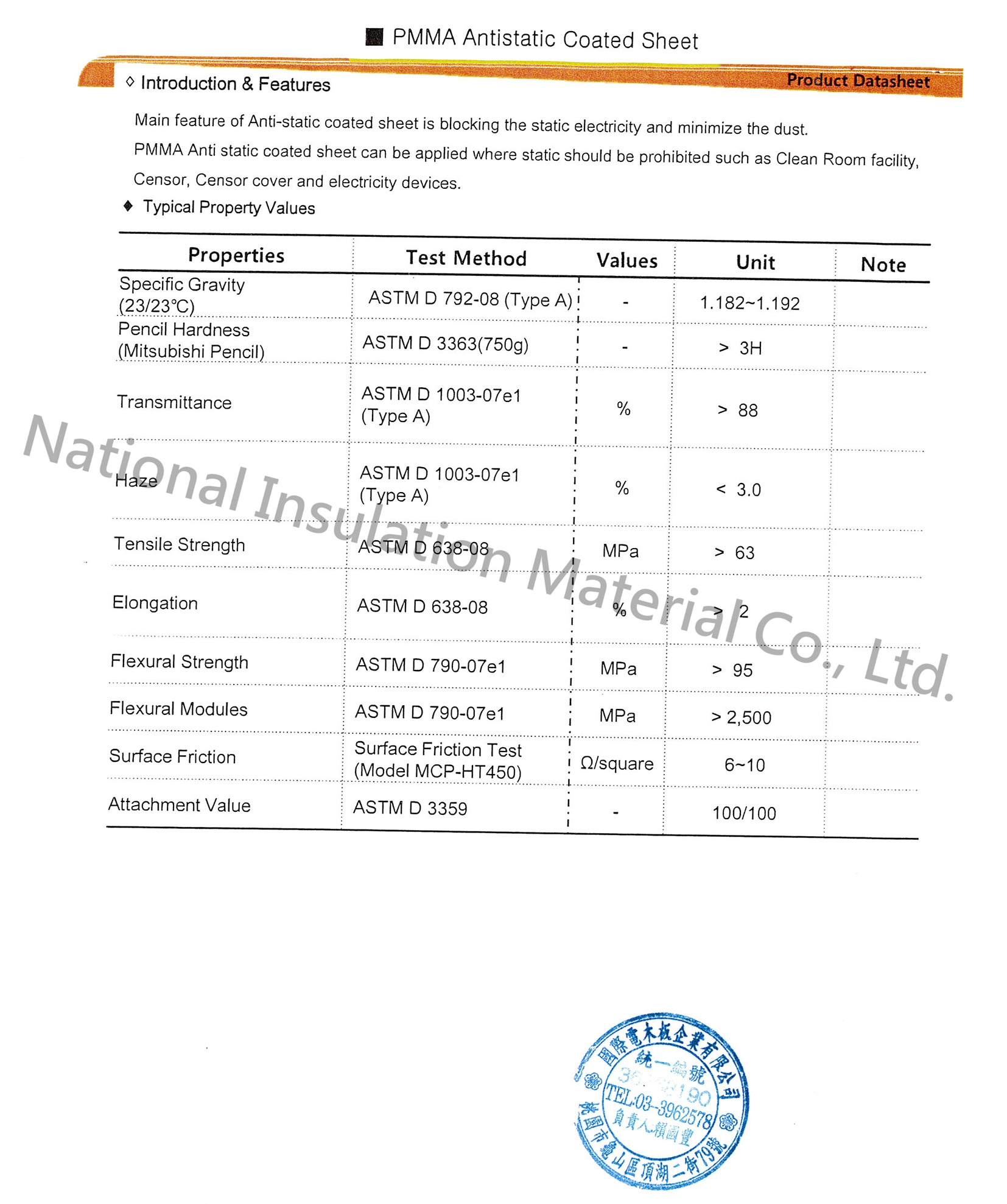
Anti-static acrylic sheet is a transparent PMMA sheet treated with a durable anti-static coating that provides static dissipative performance**. The surface resistivity typically ranges between 10⁶ and 10⁹ ohms (Ω), allowing static charges to dissipate safely and gradually without sudden electrostatic discharge.
Unlike ordinary acrylic sheets that easily attract dust due to static buildup, anti-static acrylic significantly reduces particle adhesion and minimizes ESD risks, ensuring a cleaner and safer operating environment.
Key Properties of Anti-Static Acrylic Sheet
1. Reliable ESD & Static Dissipation Performance
* Surface resistivity: **10⁶–10⁹ Ω**
* Effectively prevents static charge accumulation
* Reduces electrostatic discharge (ESD) damage to sensitive components
* Minimizes dust attraction and particle contamination
This makes anti-static acrylic sheet especially suitable for cleanrooms, semiconductor tools, and inspection equipment.
2. Exceptional Optical Transparency**
Anti-static acrylic maintains the outstanding clarity of standard PMMA:
* Light transmittance: >80%
* Visible light transmittance: up to 92%
* UV transmittance: approximately 73%
* Clear, distortion-free visibility
Its superior transparency makes it ideal for **equipment windows, inspection covers, and protective enclosures** where visual monitoring is essential.
3. High Surface Hardness & Durability
* Surface hardness up to 5H
* Scratch-resistant anti-static coating
* Long-lasting static control performance
* Resistant to cleaning agents commonly used in cleanroom environments
4. Excellent Chemical & Environmental Resistance
PMMA naturally offers good resistance to chemicals and aging. Anti-static acrylic sheets retain these advantages, providing:
* Resistance to mild acids, alkalis, and cleaning solvents
* Good weather resistance
* Stable performance under controlled industrial conditions
---
5. Easy Machining & Customization**
Anti-static acrylic sheets are easy to process using standard plastic fabrication methods:
* CNC machining
* Laser cutting
* Drilling
* Polishing
* Thermal bending
* Printing and labeling
This makes them highly suitable for **custom-designed equipment covers and enclosures**.
Typical Applications
1. Semiconductor Manufacturing Equipment**
Anti-static acrylic sheets are widely used in semiconductor fabs for:
* Equipment observation windows
* Tool enclosures and protective covers
* Wafer handling equipment shields
* Photomask protection panels
They help prevent ESD damage to wafers and reduce particle contamination in critical processes.
2. Cleanroom Engineering (ISO Class Environments)
In cleanroom facilities, anti-static acrylic is commonly used for:
* Cleanroom partitions and windows
* Equipment covers
* Workstation shields
* Safety barriers
The material supports cleanroom cleanliness standards by reducing dust adhesion caused by static electricity.
3. TFT-LCD & Flat Panel Display Manufacturing**
Applications include:
* Inspection windows
* Optical testing covers
* Protective shields for display panels
High transparency combined with static dissipation ensures accurate inspection and safe handling of delicate panels.
4. Electronics & Automation Equipment**
Used in:
* Assembly line safety covers
* Automated machine enclosures
* Measurement instrument windows
* Robotics protection panels
Anti-static acrylic helps maintain production efficiency while protecting sensitive electronic parts.
5. Medical & Laboratory Equipment**
* Medical device covers
* Laboratory instrument shields
* Transparent safety panels
Its cleanliness, clarity, and static control make it suitable for medical and laboratory environments.
| Material | Static Control | Transparency | Machinability | Typical Use |
|---|---|---|---|---|
| Anti-Static PVC Sheet | Medium | Medium | Good | Cleanroom partitions |
| Anti-Static PC Sheet | Medium–High | High | Good | Impact-resistant covers |
| Anti-Static Acrylic Sheet | High | Very High | Excellent | Viewing windows, enclosures |
| Conductive Plastic | Very High | Low | Medium | Grounding components |
Anti-static acrylic stands out for applications that require both high transparency and effective static control.
Static electricity is an invisible but serious threat in electronic and semiconductor manufacturing. Human movement, friction, and dry environments can easily generate static charges. Excessive static buildup can lead to:
Electrostatic discharge (ESD) damage
Component failure
Equipment malfunction
Reduced production yield
Increased maintenance costs
Anti-static acrylic sheets help mitigate these risks by controlling static buildup and maintaining a safer production environment.
A: High-quality anti-static acrylic sheets maintain stable surface resistivity and performance across a wide range of temperatures and humidity levels.
A: Anti-static acrylic offers superior optical clarity and surface finish, while anti-static PC provides higher impact resistance. Acrylic is preferred for inspection windows and optical applications.
A: Premium anti-static coatings are UV-cured and firmly bonded to the surface, providing long-term durability. Proper cleaning and handling can extend service life.
A: Yes. Anti-static acrylic sheets can be machined, drilled, laser-cut, and thermoformed using standard PMMA processing techniques.
A: While PMMA has good weather resistance, prolonged outdoor UV exposure may affect appearance. UV-protected grades are recommended for outdoor applications.
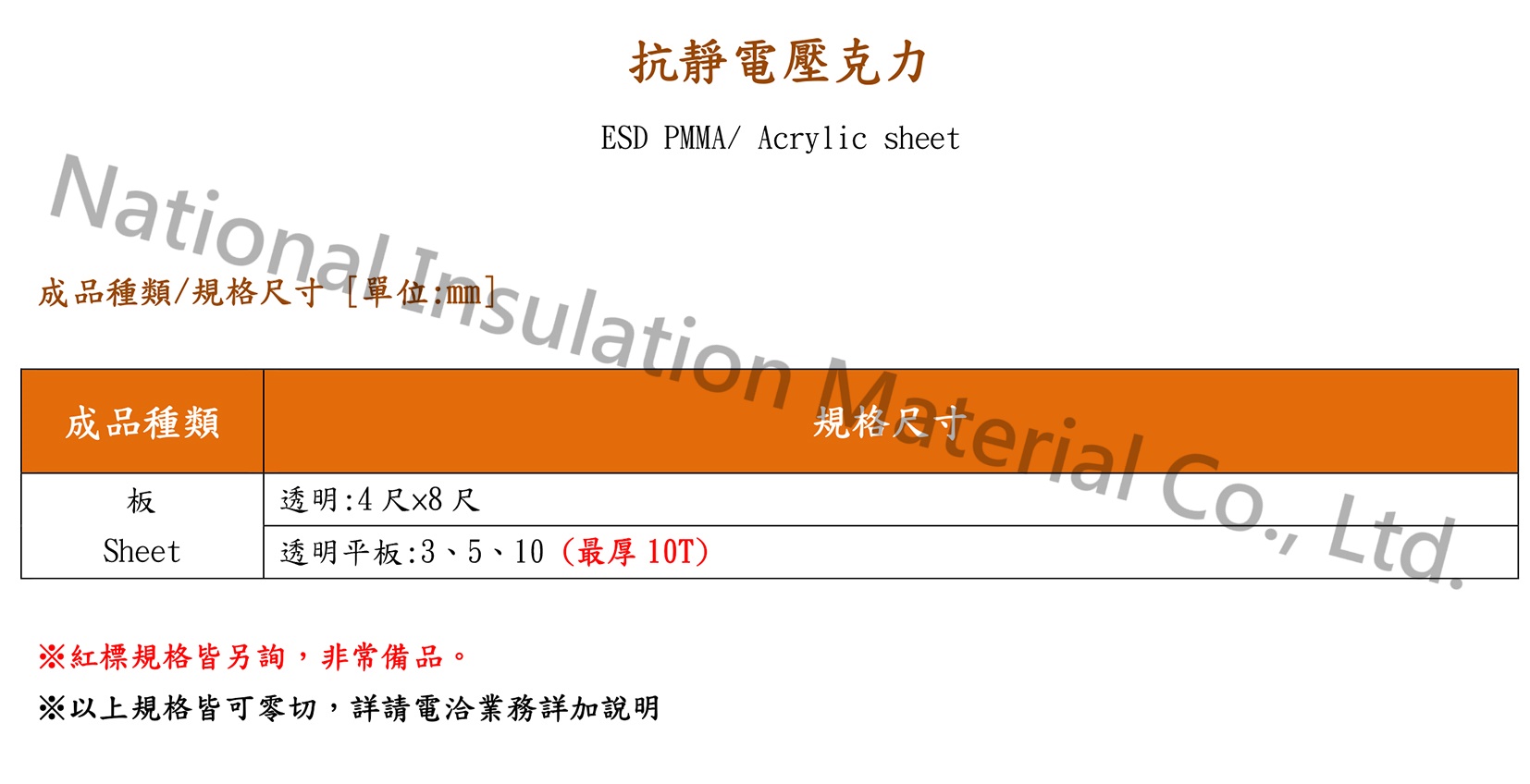
A: Common thicknesses range from 3 mm to 10 mm, with custom sizes available upon request.
Anti-Static Acrylic Sheet is a high-performance solution that combines excellent transparency, reliable static dissipation, easy fabrication, and cleanroom compatibility. It is widely used in semiconductor manufacturing, TFT-LCD production, cleanroom engineering, electronics automation, and medical equipment.
By effectively reducing electrostatic risks and particle contamination, anti-static acrylic sheets help improve product quality, enhance operational safety, and ensure stable performance in demanding high-tech environments.